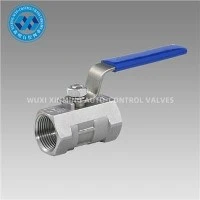
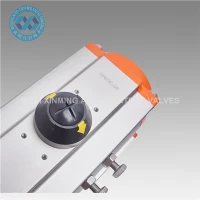
In the industrial landscape, pneumatic ball valves are pivotal components, offering reliable and efficient flow control solutions across various sectors. As a trusted pneumatic ball valve supplier, we understand the significance of integrating appropriate control systems to enhance the performance and functionality of these valves. This blog post delves into the diverse control systems that can be employed for automated pneumatic ball valves, exploring their features, benefits, and applications.
1. On - Off Control Systems
On - off control systems are the most basic and commonly used control mechanisms for pneumatic ball valves. In this setup, the valve operates in two states: fully open or fully closed. The simplicity of this system makes it highly reliable and cost - effective.
Solenoid Valve - Based Control
Solenoid valves are often used to control the air supply to the pneumatic actuator of the ball valve. When an electrical signal is applied to the solenoid, it opens or closes the valve, allowing or blocking the flow of compressed air to the actuator. This, in turn, causes the ball valve to open or close.
The advantage of solenoid valve - based on - off control is its fast response time. It can quickly switch the valve position, making it suitable for applications where rapid flow shut - off or initiation is required, such as in emergency shutdown systems. For instance, in a chemical processing plant, solenoid - controlled pneumatic ball valves can be used to quickly isolate a section of the pipeline in case of a leak or other safety hazards.
Limit Switch - Based Control
Limit switches can also be used for on - off control. These switches are installed at the fully open and fully closed positions of the ball valve. When the valve reaches either of these positions, the limit switch sends a signal to the control system, indicating the valve's status. This information can be used for monitoring purposes or to trigger other actions in the process.
Limit switch - based control provides an additional layer of safety and reliability. It ensures that the valve has reached its intended position and can be used to prevent over - travel of the valve actuator. This type of control is commonly used in industrial automation systems where precise valve positioning is crucial.
2. Proportional Control Systems
Proportional control systems offer more precise control over the position of the pneumatic ball valve compared to on - off systems. In a proportional control setup, the valve can be positioned at any point between fully open and fully closed, allowing for accurate regulation of the flow rate.
Positioner - Based Proportional Control
A positioner is a key component in a proportional control system. It receives a control signal (usually a 4 - 20 mA or 0 - 10 VDC signal) from the process controller and adjusts the air pressure to the pneumatic actuator accordingly. The positioner compares the actual position of the valve (measured by a feedback device) with the desired position indicated by the control signal and makes adjustments to ensure that the valve reaches and maintains the correct position.
Proportional control using a positioner is ideal for applications where precise flow control is required, such as in a heating, ventilation, and air - conditioning (HVAC) system. In an HVAC system, the pneumatic ball valve can be adjusted to regulate the flow of chilled water or hot water, maintaining the desired temperature in the building.
Pressure - Based Proportional Control
In some cases, pressure - based proportional control can be used. The control system measures the pressure in the pipeline and adjusts the position of the pneumatic ball valve to maintain a constant pressure. This is achieved by using a pressure sensor to measure the pressure and a controller to calculate the required valve position based on the pressure setpoint.
Pressure - based proportional control is commonly used in water supply systems, where it helps to maintain a stable water pressure throughout the distribution network. By adjusting the position of the pneumatic ball valve, the system can compensate for changes in demand and ensure a consistent water supply to consumers.
3. Sequential Control Systems
Sequential control systems are used when multiple pneumatic ball valves need to be operated in a specific sequence. This type of control is essential in complex industrial processes where the flow of fluids needs to be carefully coordinated.
Programmable Logic Controller (PLC) - Based Sequential Control
A PLC is a widely used device for sequential control of pneumatic ball valves. It can be programmed to execute a series of operations in a predefined order. The PLC receives input signals from various sensors (such as limit switches, pressure sensors, and flow sensors) and sends output signals to the solenoid valves or other control devices of the pneumatic ball valves.
For example, in a bottling plant, a PLC can be used to control a series of pneumatic ball valves to fill bottles with the correct amount of liquid. The valves are opened and closed in a specific sequence to ensure that the filling process is accurate and efficient.

Relay - Based Sequential Control
Relay - based sequential control is a simpler and more cost - effective alternative to PLC - based control for small - scale applications. Relays are used to control the electrical circuits that operate the pneumatic ball valves. The relays are connected in a specific circuit configuration to achieve the desired sequence of valve operations.
Relay - based sequential control is commonly used in small manufacturing plants or in applications where the control requirements are relatively simple. It provides a reliable and straightforward way to control the operation of multiple pneumatic ball valves.
4. Intelligent Control Systems
With the advancement of technology, intelligent control systems are becoming increasingly popular for pneumatic ball valves. These systems incorporate advanced sensors, communication protocols, and algorithms to provide enhanced functionality and performance.
Smart Positioners
Smart positioners are an example of intelligent control components. They not only provide proportional control of the valve position but also have built - in diagnostic capabilities. Smart positioners can monitor the performance of the valve actuator, detect faults, and provide real - time feedback to the control system.
For example, a smart positioner can detect if the valve actuator is experiencing excessive friction or if there is a leak in the air supply. This information can be used to schedule maintenance in advance, reducing downtime and improving the overall reliability of the system.
Wireless Control Systems
Wireless control systems offer the advantage of flexibility and ease of installation. They use wireless communication protocols, such as Wi - Fi or Bluetooth, to transmit control signals between the control system and the pneumatic ball valve.
Wireless control systems are particularly useful in applications where it is difficult or expensive to run wired connections, such as in large - scale outdoor installations or in retrofit projects. They allow for remote monitoring and control of the valves, enabling operators to adjust the valve position from a central control room or even from a mobile device.
Applications and Considerations
The choice of control system for a pneumatic ball valve depends on several factors, including the application requirements, the level of control precision needed, and the cost - effectiveness of the solution.
Industrial Applications
In industrial applications, such as oil and gas, chemical processing, and power generation, on - off control systems are often used for basic flow isolation and emergency shutdown. Proportional control systems are preferred for applications where precise flow regulation is required, such as in reactor feed control or temperature control. Sequential control systems are essential in complex processes where multiple valves need to be coordinated, such as in a distillation column or a batch processing system.
Sanitary Applications
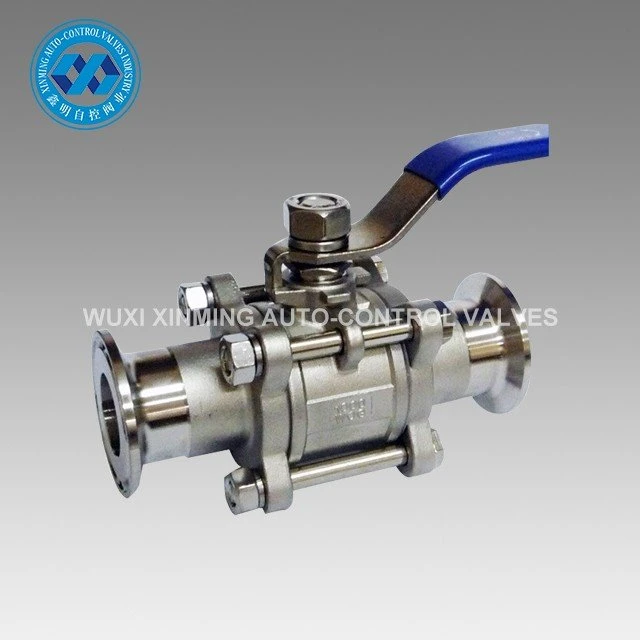
In sanitary applications, such as in the food and beverage industry or pharmaceutical manufacturing, the choice of control system also needs to consider factors such as hygiene and cleanability. Sanitary Ball Valve are designed to meet strict sanitary standards, and the control systems used with them should be able to operate in a clean and sterile environment. Proportional control systems can be used to accurately control the flow of liquids in these applications, ensuring consistent product quality.
Plastic Actuator Applications
For applications where corrosion resistance and light weight are important, Double Acting Plastic Pneumatic Actuator Ball Valve can be used. The control systems for these valves should be compatible with the plastic actuator and provide reliable operation. On - off control systems are often sufficient for basic applications, while proportional control systems can be used for more precise flow control.
Cost - Effective Chinese Actuator Applications
Chinese Pneumatic Actuator Wafer Thin Ball Valve Factory Price offer a cost - effective solution for many industrial applications. When choosing a control system for these valves, the cost - performance ratio should be considered. On - off control systems are usually the most cost - effective option for simple applications, while more advanced proportional or sequential control systems may be required for more complex processes.
Conclusion
As a pneumatic ball valve supplier, we recognize the importance of providing our customers with the right control systems to meet their specific needs. Whether it's a simple on - off control system for basic flow isolation or a sophisticated intelligent control system for precise and efficient process control, we have the expertise and products to offer reliable solutions.
If you are interested in learning more about our pneumatic ball valves and the control systems available, or if you have specific requirements for your application, we invite you to contact us for a detailed discussion. Our team of experts is ready to assist you in selecting the most suitable valve and control system combination for your project.
References
- "Industrial Valves Handbook" by Valve Manufacturers Association
- "Pneumatic Systems Design and Application" by ASME Press
- "Control Systems Engineering" by Norman S. Nise