What is the Accuracy of Flow Control with a Sanitary Ball Valve?
In the realm of fluid control systems, the accuracy of flow regulation is a critical factor that directly impacts the efficiency and quality of various industrial processes. As a trusted sanitary ball valve supplier, we understand the significance of providing valves that offer precise flow control in sanitary applications. In this blog, we will delve into the concept of flow control accuracy with sanitary ball valves, exploring the factors that influence it and the benefits it brings to different industries.
Understanding Sanitary Ball Valves
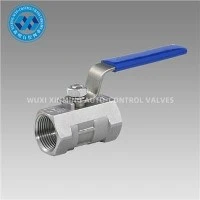
Sanitary ball valves are specifically designed for applications where hygiene and cleanliness are of utmost importance, such as in the food and beverage, pharmaceutical, and biotechnology industries. These valves feature a spherical closure element (the ball) with a hole in the middle. When the valve is open, the hole in the ball aligns with the pipeline, allowing fluid to flow through. When the valve is closed, the ball is rotated 90 degrees, blocking the flow.
One of the key advantages of sanitary ball valves is their ability to provide quick and reliable on-off control. However, they can also be used for throttling applications, where the flow rate needs to be adjusted. The accuracy of flow control in a sanitary ball valve depends on several factors, including the valve design, the quality of manufacturing, and the operating conditions.
Factors Affecting Flow Control Accuracy
- Valve Design: The design of the ball and the seat in a sanitary ball valve plays a crucial role in determining its flow control accuracy. A well-designed ball and seat combination ensures a tight seal when the valve is closed, minimizing leakage. For throttling applications, the shape of the ball and the flow path through the valve can affect the relationship between the valve position and the flow rate. For example, a full-port ball valve, which has a ball with a hole the same size as the pipeline, offers less resistance to flow and can provide more accurate flow control at higher flow rates compared to a reduced-port ball valve.
- Manufacturing Quality: The precision of manufacturing is essential for achieving accurate flow control. High-quality materials and advanced manufacturing processes are used to ensure that the ball and the seat are machined to tight tolerances. Any irregularities in the surface finish or dimensions of the ball and seat can lead to inconsistent flow rates and reduced accuracy. At our company, we use state-of-the-art manufacturing techniques and strict quality control measures to produce sanitary ball valves that meet the highest standards of accuracy and performance.
- Operating Conditions: The operating conditions, such as the pressure, temperature, and viscosity of the fluid, can also affect the flow control accuracy of a sanitary ball valve. High-pressure applications may require a valve with a stronger design to prevent deformation of the ball or the seat, which could lead to leakage or inaccurate flow control. Similarly, high-temperature fluids can cause thermal expansion, which may affect the fit between the ball and the seat. Viscous fluids may require a valve with a larger flow area to ensure smooth flow and accurate control.
Measuring Flow Control Accuracy
The accuracy of flow control in a sanitary ball valve is typically measured in terms of the valve's flow characteristic. The flow characteristic describes the relationship between the valve position (the degree of opening of the valve) and the flow rate. There are several types of flow characteristics, including linear, equal percentage, and quick opening.
- Linear Flow Characteristic: A valve with a linear flow characteristic has a direct proportional relationship between the valve position and the flow rate. This means that a 50% opening of the valve will result in a flow rate that is approximately 50% of the maximum flow rate. Linear flow characteristics are suitable for applications where a constant change in flow rate is required for a given change in valve position, such as in some mixing processes.
- Equal Percentage Flow Characteristic: An equal percentage flow characteristic means that a given percentage change in the valve position will result in an equal percentage change in the flow rate. For example, a 10% change in the valve position will result in a 10% change in the flow rate, regardless of the initial valve position. This type of flow characteristic is useful for applications where fine control of the flow rate is required at low flow rates, such as in chemical dosing systems.
- Quick Opening Flow Characteristic: A quick opening flow characteristic provides a large increase in flow rate for a small change in valve position at the beginning of the valve opening. This type of flow characteristic is suitable for applications where a rapid increase in flow is required, such as in emergency shutdown systems.
Benefits of Accurate Flow Control with Sanitary Ball Valves
- Improved Process Efficiency: Accurate flow control allows for precise regulation of the fluid flow rate, which can improve the efficiency of industrial processes. For example, in a food and beverage production line, accurate flow control ensures that the right amount of ingredients is added at the right time, resulting in consistent product quality and reduced waste.
- Enhanced Product Quality: In industries such as pharmaceuticals and biotechnology, where product quality is critical, accurate flow control is essential for maintaining the integrity of the manufacturing process. A sanitary ball valve with high flow control accuracy can help ensure that the correct dosage of medications or the right amount of culture media is delivered, leading to high-quality products.
- Cost Savings: By providing accurate flow control, sanitary ball valves can help reduce energy consumption and operating costs. For example, in a heating or cooling system, accurate flow control can prevent over - or under - heating, resulting in energy savings. Additionally, reduced waste and improved product quality can lead to cost savings in the long run.
Our Product Range for Precise Flow Control
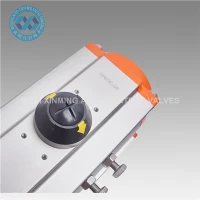
As a leading sanitary ball valve supplier, we offer a wide range of products that are designed to provide accurate flow control in various applications. Our product portfolio includes Pneumatic Actuator 3PC Thread Ball Valve, which is equipped with a pneumatic actuator for automated flow control. The 3PC thread design allows for easy installation and maintenance, making it suitable for a variety of sanitary applications.
We also offer the Double Acting Plastic Pneumatic Actuator Ball Valve. The double - acting actuator provides precise control of the valve position, and the plastic construction makes it lightweight and corrosion - resistant. This valve is ideal for applications where a cost - effective and reliable flow control solution is required.
In addition, our Three Way Ball Valve is designed for applications where the flow needs to be diverted or mixed. The three - way design allows for flexible flow control, making it suitable for complex fluid handling systems.


Conclusion
The accuracy of flow control with a sanitary ball valve is a critical factor in many industrial applications. By understanding the factors that affect flow control accuracy, such as valve design, manufacturing quality, and operating conditions, and by choosing the right valve for the specific application, industries can achieve improved process efficiency, enhanced product quality, and cost savings.
As a trusted sanitary ball valve supplier, we are committed to providing high - quality valves that offer accurate flow control. Our extensive product range, including the Pneumatic Actuator 3PC Thread Ball Valve, Double Acting Plastic Pneumatic Actuator Ball Valve, and Three Way Ball Valve, is designed to meet the diverse needs of our customers.
If you are looking for a reliable solution for accurate flow control in your sanitary applications, we invite you to contact us for more information and to discuss your specific requirements. Our team of experts is ready to assist you in selecting the right valve for your project and to provide you with the best possible service.
References
- Perry, R. H., & Green, D. W. (1997). Perry's Chemical Engineers' Handbook. McGraw - Hill.
- Walas, S. M. (1990). Chemical Process Equipment: Selection and Design. Butterworth - Heinemann.