Hey there! As a supplier of WCB Ball Valves, I often get asked about what the ball material in a WCB Ball Valve is. So, I thought I'd sit down and write this blog to share some insights on this topic.
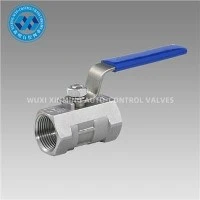
First off, let's understand what a WCB Ball Valve is. WCB is a type of carbon steel casting material. It's widely used in the valve industry because it offers good strength, toughness, and weldability. A ball valve, on the other hand, is a type of valve that uses a spherical disc (the ball) to control the flow of fluid through it. When the ball is rotated, the hole in the ball aligns with the pipe, allowing the fluid to pass through. When the ball is turned 90 degrees, the solid part of the ball blocks the flow.
Now, let's talk about the ball material. There are several materials that can be used for the ball in a WCB Ball Valve, and each has its own set of properties and applications.
Stainless Steel
Stainless steel is one of the most commonly used materials for the ball in WCB Ball Valves. It's popular because it's corrosion-resistant, which means it can withstand exposure to various chemicals and environments without rusting or deteriorating. This makes it ideal for use in industries such as chemical processing, food and beverage, and water treatment.
Stainless steel balls also offer good strength and durability. They can handle high pressures and temperatures, making them suitable for a wide range of applications. For example, in a chemical processing plant, where the valves may be exposed to corrosive chemicals and high pressures, stainless steel balls can ensure reliable performance.
Brass
Brass is another material that's often used for the ball in WCB Ball Valves. It's a copper-zinc alloy that offers good corrosion resistance, especially in water-based applications. Brass is also relatively easy to machine, which means it can be manufactured into precise shapes and sizes.
One of the advantages of using brass balls is their cost-effectiveness. They're generally less expensive than stainless steel balls, making them a popular choice for applications where cost is a major consideration. However, brass may not be suitable for applications where the valve will be exposed to highly corrosive chemicals or high temperatures.
Titanium
Titanium is a high-performance material that's used in some specialized WCB Ball Valves. It's known for its excellent corrosion resistance, even in highly aggressive environments such as seawater and certain acids. Titanium is also very strong and lightweight, which makes it ideal for applications where weight is a concern, such as in aerospace and marine industries.
However, titanium is also more expensive than stainless steel and brass. So, it's typically used in applications where the benefits of its properties outweigh the higher cost.
Ceramic
Ceramic balls are becoming increasingly popular in WCB Ball Valves, especially in applications where high wear resistance is required. Ceramic is extremely hard and can withstand abrasive particles in the fluid without getting damaged. This makes it suitable for use in industries such as mining, pulp and paper, and power generation.
Ceramic balls also offer excellent chemical resistance, which means they can be used in applications where the valve will be exposed to corrosive chemicals. However, ceramic is brittle and can crack if subjected to sudden shocks or high pressures. So, it's important to design the valve properly to ensure the ceramic ball can perform reliably.
When choosing the ball material for a WCB Ball Valve, there are several factors to consider. The first is the nature of the fluid that the valve will be handling. If the fluid is corrosive, then a corrosion-resistant material such as stainless steel or titanium may be required. If the fluid contains abrasive particles, then a wear-resistant material such as ceramic may be a better choice.
The operating conditions of the valve also play a role in the material selection. For example, if the valve will be operating at high temperatures or pressures, then a material that can withstand these conditions, such as stainless steel, should be used.
Another factor to consider is the cost. Different materials have different costs, and it's important to balance the performance requirements of the valve with the budget.
As a WCB Ball Valve supplier, we offer a wide range of ball materials to meet the diverse needs of our customers. Whether you need a valve for a chemical processing plant, a water treatment facility, or any other application, we can help you choose the right ball material for your specific requirements.


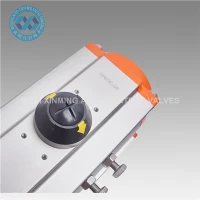
We also have some great products in our catalog. For instance, we have the Intelligent-driven Double-acting Pneumatic Plastic Actuator Ball Valve For Precise Opening Control. This valve offers precise control over the flow of fluid, thanks to its intelligent-driven pneumatic actuator. It's suitable for applications where accurate flow regulation is required.
If you're looking for a 3-way ball valve, we have two great options. The 3 Way Ball Valve With Pneumatic Actuator is designed for sanitary applications and offers reliable performance. And the 3 Way Ball Valve With 180 Degree Turn Pneumatic Actuator allows for easy and efficient flow diversion.
If you're interested in our WCB Ball Valves or have any questions about the ball material or any other aspect of our products, don't hesitate to reach out. We're here to help you find the best valve solution for your needs. Whether you're a small business or a large industrial enterprise, we can provide you with high-quality valves at competitive prices.
In conclusion, the ball material in a WCB Ball Valve is an important factor that can significantly affect the performance and durability of the valve. By understanding the properties of different materials and considering the specific requirements of your application, you can choose the right ball material to ensure the reliable operation of your valve. So, if you're in the market for a WCB Ball Valve, give us a call or drop us an email, and let's start a conversation about your valve needs.
References
- Valve Handbook, by Ernest O. Doebelin
- Industrial Valves: Design and Application, by John S. Cameron