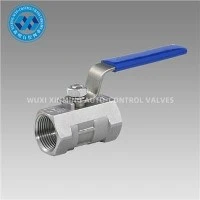
Hey there! As a supplier of welded ball valves, I often get asked about the differences between floating and trunnion-mounted welded ball valves. So, I thought I'd write this blog to break it down for you in a simple and easy-to-understand way.
Let's start with the basics. A ball valve is a type of valve that uses a spherical disc to control the flow of fluid through a pipe. The ball has a hole in the middle, and when the valve is open, the hole aligns with the pipe, allowing the fluid to flow through. When the valve is closed, the ball is rotated 90 degrees, blocking the flow of fluid.
Now, let's talk about the two main types of welded ball valves: floating and trunnion-mounted.
Floating Welded Ball Valves
A floating welded ball valve is the most common type of ball valve. In this design, the ball is not fixed in place but is free to float between the two seats. When the valve is closed, the fluid pressure pushes the ball against the downstream seat, creating a tight seal. The upstream seat only provides support and does not contribute significantly to the sealing.
One of the main advantages of a floating welded ball valve is its simplicity. It has fewer parts compared to a trunnion-mounted ball valve, which makes it easier and cheaper to manufacture. It also has a relatively compact design, which makes it suitable for applications where space is limited.
Another advantage is its excellent sealing performance. The floating ball design allows the valve to adapt to changes in pressure and temperature, ensuring a tight seal even under varying conditions. This makes it ideal for applications where a high degree of leakage prevention is required, such as in the oil and gas industry.
However, floating welded ball valves also have some limitations. They are generally not suitable for high-pressure applications because the fluid pressure can cause the ball to deform, leading to a loss of sealing performance. They are also not recommended for large-diameter valves because the weight of the ball can cause it to sag, again affecting the sealing.
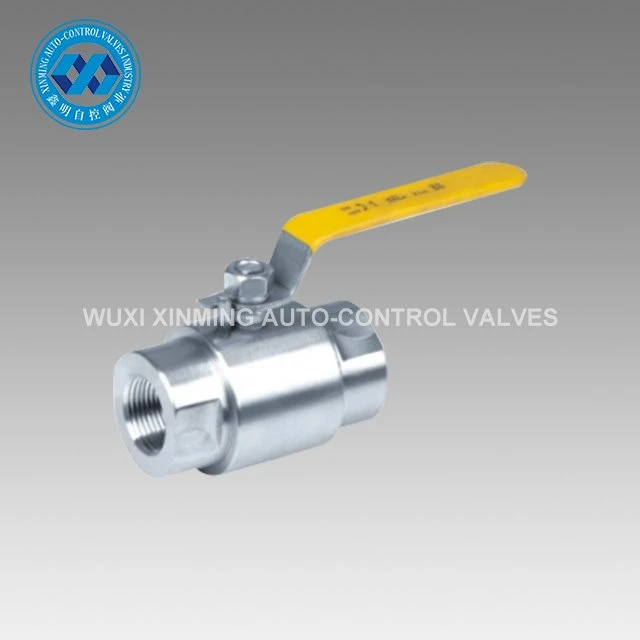
If you're interested in our floating welded ball valves or other types of ball valves like the 1PC Thread Ball Valve, feel free to reach out to us for more information.
Trunnion-Mounted Welded Ball Valves
A trunnion-mounted welded ball valve, on the other hand, has a different design. In this type of valve, the ball is supported by trunnions, which are small shafts located at the top and bottom of the ball. The trunnions allow the ball to rotate freely while keeping it in place.
The main advantage of a trunnion-mounted welded ball valve is its ability to handle high-pressure and large-diameter applications. The trunnion support reduces the load on the seats, preventing the ball from deforming under high pressure. This makes it suitable for applications in the oil and gas industry, where high-pressure pipelines are common.
Another advantage is its improved durability. The trunnion support helps to distribute the load evenly across the ball and seats, reducing wear and tear. This results in a longer service life for the valve, which can save you money in the long run.
However, trunnion-mounted welded ball valves are more complex and expensive to manufacture compared to floating ball valves. They also have a larger footprint, which may not be suitable for applications where space is limited.
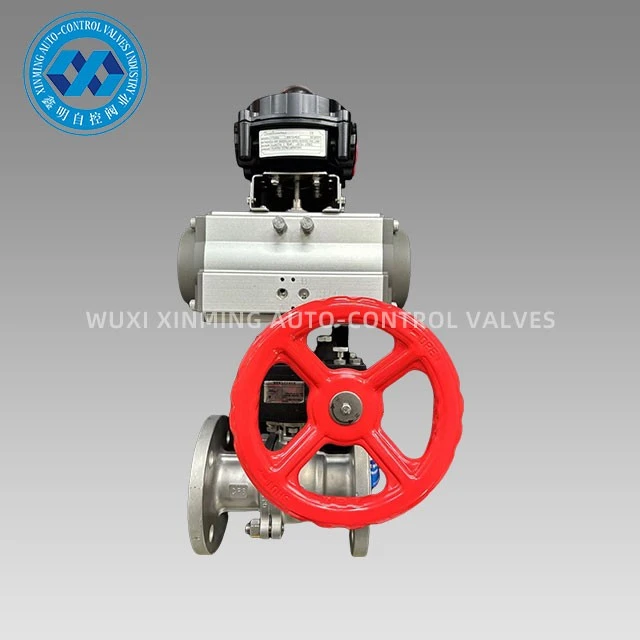
If you're in need of a trunnion-mounted welded ball valve for your high-pressure application, or you're interested in our Explosion-Proof Pneumatic Ball Valve or Pneumatic Ball Valve, don't hesitate to contact us.
Key Differences
Now that we've discussed the basic features of floating and trunnion-mounted welded ball valves, let's summarize the key differences between the two:
- Design: The main difference lies in the way the ball is supported. A floating ball valve has a ball that is free to float between the seats, while a trunnion-mounted ball valve has a ball that is supported by trunnions.
- Pressure Rating: Floating ball valves are generally suitable for low to medium-pressure applications, while trunnion-mounted ball valves can handle high-pressure applications.
- Size: Floating ball valves are more commonly used for small to medium-diameter valves, while trunnion-mounted ball valves are preferred for large-diameter valves.
- Sealing Performance: Both types of valves offer good sealing performance, but the floating ball valve relies more on the fluid pressure to create a seal, while the trunnion-mounted ball valve has a more stable sealing mechanism.
- Cost: Floating ball valves are generally cheaper to manufacture and purchase compared to trunnion-mounted ball valves.
Which One Should You Choose?
The choice between a floating and a trunnion-mounted welded ball valve depends on several factors, including the pressure and temperature of the application, the size of the valve, and the budget.
If you're working on a low to medium-pressure application with a small to medium-diameter valve and cost is a major concern, a floating welded ball valve may be the best choice. It offers good sealing performance at a relatively low cost.
On the other hand, if you're dealing with high-pressure and large-diameter applications, a trunnion-mounted welded ball valve is the way to go. It can handle the high pressure and provides a more durable and reliable solution.
We're here to help you make the right choice for your specific application. Whether you need a floating or trunnion-mounted welded ball valve, or any other type of ball valve from our product range, we can provide you with the expert advice and high-quality products you need. Just reach out to us, and we'll start the procurement discussion.
References
- Valve Handbook, 4th Edition, by J. S. T. J. S. T. Smith
- Industrial Valves: Selection and Sizing, by J. R. A. J. R. A. Perry