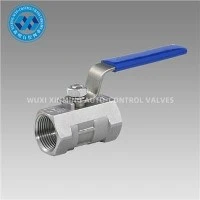
In the world of fluid control systems, ball valves are indispensable components, known for their reliability, durability, and efficient flow regulation capabilities. As a leading ball valve supplier, we often encounter inquiries about the flow coefficient of ball valves. Understanding this concept is crucial for selecting the right valve for specific applications and ensuring optimal system performance. In this blog post, we will delve into the details of the flow coefficient of ball valves, exploring what it is, how it is calculated, and why it matters in various industries.
What is the Flow Coefficient?
The flow coefficient, often denoted as Cv, is a measure of a valve's capacity to pass fluid. It represents the number of US gallons per minute (GPM) of water at 60°F that will flow through a valve with a pressure drop of 1 pound per square inch (psi) across the valve. In simpler terms, the Cv value indicates how much fluid a valve can handle under specific conditions. A higher Cv value means the valve can pass more fluid with less resistance, while a lower Cv value indicates a more restrictive flow path.
Calculating the Flow Coefficient
The flow coefficient of a ball valve can be determined through a combination of theoretical calculations and empirical testing. The basic formula for calculating Cv is as follows:
[ Cv = \frac{Q}{\sqrt{\Delta P}} ]
Where:
- ( Cv ) is the flow coefficient
- ( Q ) is the flow rate in US gallons per minute (GPM)
- ( \Delta P ) is the pressure drop across the valve in pounds per square inch (psi)
However, this formula is a simplified representation, and in real-world applications, other factors such as fluid viscosity, valve size, and valve design can significantly affect the flow coefficient. Therefore, manufacturers often conduct extensive testing to determine the accurate Cv values for their ball valves under various operating conditions.
Factors Affecting the Flow Coefficient of Ball Valves
Several factors can influence the flow coefficient of ball valves, including:
- Valve Size: Larger ball valves generally have higher Cv values because they offer a larger flow path for the fluid to pass through. As the valve size increases, the cross-sectional area of the flow path also increases, allowing more fluid to flow with less resistance.
- Ball Design: The design of the ball inside the valve can have a significant impact on the flow coefficient. Full-port ball valves, which have a ball with a hole diameter equal to the pipe diameter, offer the least resistance to flow and therefore have higher Cv values compared to standard-port ball valves.
- Valve Trim: The trim of the valve, including the seat material and the shape of the valve opening, can also affect the flow coefficient. Soft-seated ball valves typically have higher Cv values than metal-seated ball valves because the soft seat material conforms better to the ball, reducing leakage and improving flow efficiency.
- Fluid Properties: The properties of the fluid being controlled, such as viscosity, density, and temperature, can influence the flow coefficient. Highly viscous fluids require more energy to flow through the valve, resulting in a lower Cv value compared to less viscous fluids.
Importance of the Flow Coefficient in Ball Valve Selection
Selecting the right ball valve with an appropriate flow coefficient is crucial for ensuring optimal system performance. Here are some key reasons why the flow coefficient matters:
- System Efficiency: A ball valve with a higher Cv value allows more fluid to flow through the system with less pressure drop, reducing energy consumption and improving overall system efficiency.
- Flow Control: The flow coefficient helps in determining the valve's ability to control the flow rate accurately. By selecting a valve with the right Cv value, you can ensure that the system operates within the desired flow range.
- Compatibility: Matching the flow coefficient of the ball valve to the requirements of the system ensures compatibility and prevents issues such as cavitation, noise, and vibration.
Our Ball Valve Product Range
As a trusted ball valve supplier, we offer a wide range of ball valves with different flow coefficients to meet the diverse needs of our customers. Our product portfolio includes Ceramic Ball Valve, Intelligent-driven Double-acting Pneumatic Plastic Actuator Ball Valve For Precise Opening Control, and Pneumatic Control Ball Valve.
Our ceramic ball valves are known for their excellent wear resistance and corrosion resistance, making them ideal for applications in harsh environments. The intelligent-driven double-acting pneumatic plastic actuator ball valve offers precise opening control, allowing for accurate flow regulation in critical processes. Our pneumatic control ball valves are designed for reliable and efficient operation in a variety of industrial applications.
Conclusion
In conclusion, the flow coefficient of a ball valve is a critical parameter that determines the valve's ability to pass fluid and control the flow rate. Understanding this concept is essential for selecting the right ball valve for specific applications and ensuring optimal system performance. As a leading ball valve supplier, we are committed to providing high-quality ball valves with accurate flow coefficients to meet the diverse needs of our customers.


If you are in need of ball valves for your project or have any questions about the flow coefficient or our product range, please feel free to contact us. Our team of experts is ready to assist you in selecting the right ball valve for your application and providing you with the best solutions.
References
- Crane Technical Paper No. 410, Flow of Fluids Through Valves, Fittings, and Pipe.
- ASME MFC-17M-2016, Measurement of Fluid Flow Using Small Bore Precision Orifice Meters.