Fluid viscosity is a critical property that can significantly influence the performance and operation of pneumatic ball valves. As a leading pneumatic ball valve supplier, we have witnessed firsthand the diverse impacts of fluid viscosity on these essential components in various industrial applications. In this blog, we will delve into the effects of fluid viscosity on pneumatic ball valves, exploring how it affects valve operation, performance, and maintenance.
Understanding Fluid Viscosity
Viscosity is a measure of a fluid's resistance to flow. It describes the internal friction within a fluid, determining how easily it can be deformed or moved. Fluids with high viscosity, such as honey or molasses, flow slowly and have a thick consistency, while low - viscosity fluids, like water, flow more freely. In industrial settings, the viscosity of fluids can vary widely depending on factors such as temperature, pressure, and the chemical composition of the fluid.
Impact on Valve Operation
Opening and Closing Torque
One of the most immediate impacts of fluid viscosity on a pneumatic ball valve is the effect on the opening and closing torque. High - viscosity fluids require more force to move through the valve. When a pneumatic actuator is used to operate the ball valve, the increased resistance from the viscous fluid means that the actuator must generate a higher torque to open or close the valve. This can put additional stress on the actuator and the valve stem, potentially leading to premature wear and tear.
For example, in a process where a thick, viscous oil is being transported, the pneumatic actuator may struggle to overcome the resistance of the oil. If the actuator is not sized correctly to handle the increased torque requirements, it may fail to fully open or close the valve, leading to flow control issues.
Flow Control Accuracy
Fluid viscosity also affects the accuracy of flow control in a pneumatic ball valve. In a low - viscosity fluid, the valve can quickly and precisely control the flow rate. However, with high - viscosity fluids, the flow behavior becomes more complex. The fluid may not flow smoothly through the valve, and there may be a delay in the response of the valve to changes in the actuator's position.
This can result in inaccurate flow control, especially in applications where precise flow rates are crucial. For instance, in a chemical manufacturing process where the addition of a viscous reactant needs to be carefully controlled, a pneumatic ball valve may struggle to maintain the desired flow rate due to the high viscosity of the fluid.
Impact on Valve Performance
Sealing Performance
The sealing performance of a pneumatic ball valve can be compromised by high - viscosity fluids. When a valve is closed, the seal between the ball and the seat is designed to prevent leakage. However, viscous fluids can adhere to the ball and seat surfaces, creating a film that may interfere with the sealing mechanism.
Over time, the build - up of viscous deposits can cause the seal to deteriorate, leading to leakage. This not only affects the efficiency of the system but can also pose safety risks, especially in applications where the fluid is hazardous.
Wear and Tear
Viscous fluids can also accelerate the wear and tear of a pneumatic ball valve. As the fluid flows through the valve, it exerts more force on the internal components, such as the ball and the seat. The increased friction caused by the high - viscosity fluid can lead to abrasion and erosion of these components.
For example, in a slurry handling application where the fluid contains solid particles suspended in a viscous medium, the abrasive action of the particles can quickly damage the valve's internal surfaces. This can reduce the valve's lifespan and increase the frequency of maintenance and replacement.
Impact on Valve Maintenance
Cleaning and Maintenance Frequency
High - viscosity fluids often require more frequent cleaning and maintenance of pneumatic ball valves. The viscous deposits that accumulate on the valve's internal surfaces can be difficult to remove and may require special cleaning procedures.
Regular maintenance is essential to prevent the build - up of deposits and to ensure the proper functioning of the valve. This may involve disassembling the valve, cleaning the components, and inspecting for any signs of wear or damage.
Lubrication Requirements
Viscous fluids can also affect the lubrication requirements of a pneumatic ball valve. In some cases, the high - viscosity fluid itself may act as a lubricant, but in other situations, additional lubrication may be necessary to reduce friction and wear.
The type of lubricant used must be compatible with the fluid being handled to avoid any chemical reactions that could damage the valve. For example, in a food processing application where a viscous food product is being transported, a food - grade lubricant must be used to ensure compliance with safety regulations.
Our Product Solutions
As a pneumatic ball valve supplier, we offer a range of products that are designed to handle fluids of different viscosities. Our Stainless Steel Flanged Floating Jacketed Ball Valve For Investment Casting is suitable for applications where high - temperature and high - viscosity fluids are involved. The jacketed design allows for temperature control, which can help to reduce the viscosity of the fluid and improve valve performance.
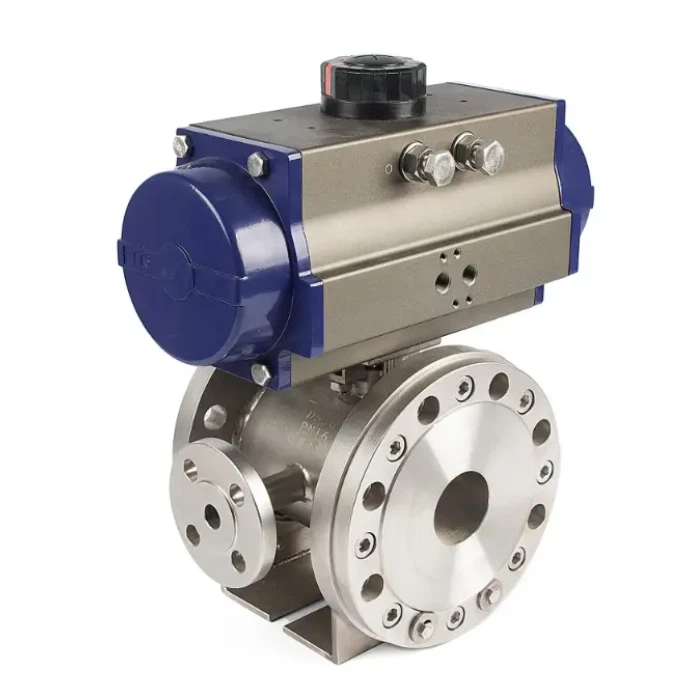

Our 3 Way Ball Valve With 180 Degree Turn Pneumatic Actuator is another versatile option. It can be used in complex flow control systems where the direction of fluid flow needs to be changed. The 180 - degree turn actuator provides precise control, even in applications with viscous fluids.
For applications that require electrical operation, our Electrical Ball Valve offers a reliable solution. It can be easily integrated into automated systems and is designed to handle a wide range of fluid viscosities.
Conclusion
Fluid viscosity has a profound impact on the operation, performance, and maintenance of pneumatic ball valves. As a pneumatic ball valve supplier, we understand the challenges posed by high - viscosity fluids and offer products that are designed to overcome these challenges. Whether you are dealing with thick oils, slurries, or other viscous fluids, our valves can provide reliable and efficient flow control.
If you are in the market for pneumatic ball valves and need to address the specific challenges of fluid viscosity, we invite you to contact us for a consultation. Our team of experts can help you select the right valve for your application and provide guidance on installation, maintenance, and operation.