Hey there! As a supplier of pneumatic ball valves, I often get asked about the maximum pressure these valves can withstand. It's a crucial question, especially for industries where precise control and high - pressure applications are the norm. So, let's dive right in and explore this topic.
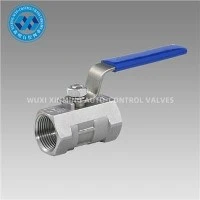
First off, what exactly is a pneumatic ball valve? Well, it's a type of valve that uses a ball with a hole in the middle to control the flow of fluid or gas. The ball rotates within the valve body, and when the hole aligns with the flow path, the valve is open; when it's perpendicular, the valve is closed. The pneumatic part comes in with the use of compressed air to operate the valve, which allows for quick and efficient control.
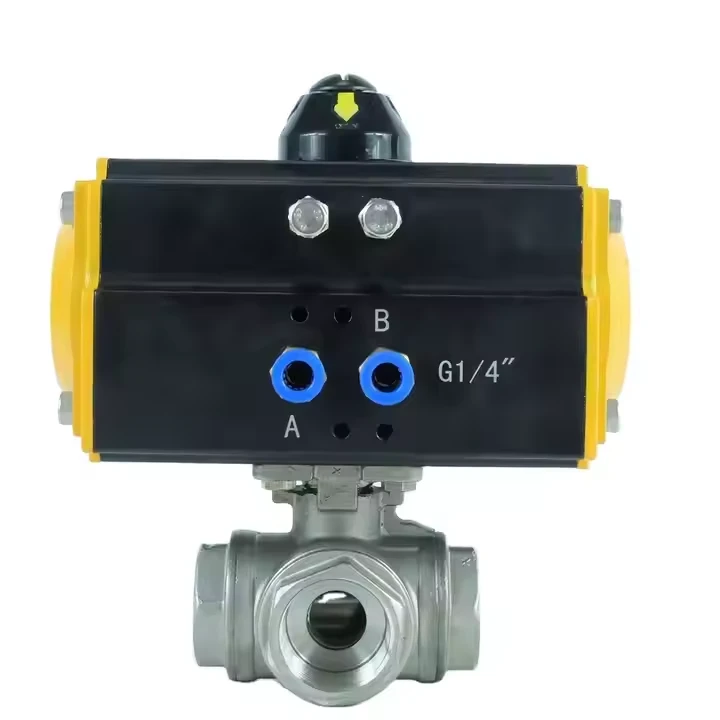
Now, the maximum pressure a pneumatic ball valve can handle depends on several factors. One of the most significant factors is the material of the valve. For instance, stainless - steel valves are known for their durability and ability to withstand high pressures. Our Tee High Platform Stainless Steel T - L - type Pneumatic Ball Valve is made of high - quality stainless steel. Stainless steel has excellent corrosion resistance and mechanical strength, which means it can handle a good amount of pressure. These valves are often used in industries like chemical processing, oil and gas, and water treatment, where the pressure can be quite high.
Another factor is the design of the valve. Some valves are designed specifically for high - pressure applications. The Pneumatic Ball Valve For Precision Control And Industrial Flow Regulation is engineered to provide precise control even under high - pressure conditions. The internal components, such as the ball and the seals, are designed to withstand the force exerted by the fluid or gas at high pressures. The seals play a crucial role here. They need to be able to maintain a tight seal to prevent leakage, even when the pressure is pushing against them.
The size of the valve also matters. Generally, smaller valves can handle higher pressures compared to larger ones. This is because the surface area exposed to the pressure is smaller, so the force acting on the valve components is more concentrated. However, larger valves are often used in applications where a higher flow rate is required, and they are designed to handle the pressure within their capacity.
Let's talk about some typical pressure ratings. In general, pneumatic ball valves can handle pressures ranging from a few pounds per square inch (psi) to several thousand psi. For light - duty applications, like in some home plumbing systems or small - scale industrial setups, valves might be rated for pressures up to 150 psi. These are usually used for controlling the flow of water or low - pressure gases.
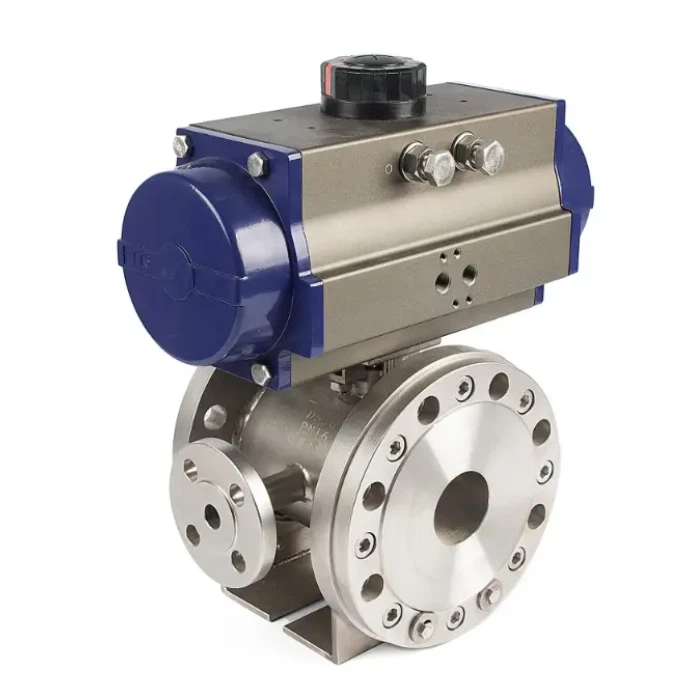
On the other hand, in heavy - duty industrial applications, such as in oil refineries or high - pressure hydraulic systems, the valves can handle pressures well over 1000 psi. Our Stainless Steel Flanged Floating Jacketed Ball Valve For Investment Casting is suitable for such high - pressure applications. The flanged design provides a secure connection, and the floating jacketed feature helps in maintaining the integrity of the valve under extreme pressure conditions.
It's important to note that the maximum pressure rating is not just about the valve's physical ability to withstand the pressure. It also takes into account safety factors. Manufacturers test the valves to ensure that they can handle a certain pressure without failing, but they also add a safety margin to account for any unexpected spikes in pressure or other unforeseen conditions.
When choosing a pneumatic ball valve for a specific application, it's crucial to consider the maximum pressure of the system. If the pressure in the system exceeds the valve's rated pressure, it can lead to valve failure, which can be dangerous and costly. Valve failure can result in leaks, which can cause environmental hazards, damage to equipment, and even pose a risk to personnel.
In addition to pressure, other factors like temperature, the type of fluid or gas being handled, and the frequency of operation also need to be considered. For example, if the fluid is highly corrosive, a valve made of a more corrosion - resistant material will be required. If the valve is going to be opened and closed frequently, it needs to be designed for high - cycle operation.
As a supplier, we have a wide range of pneumatic ball valves to meet different pressure requirements. Whether you need a valve for a low - pressure application or a high - pressure industrial setup, we've got you covered. We work closely with our customers to understand their specific needs and recommend the most suitable valve for their application.
If you're in the market for a pneumatic ball valve and want to know more about the maximum pressure it can withstand, or if you have any other questions regarding our products, don't hesitate to reach out. We're here to help you make the right choice for your project. Whether it's for a small - scale operation or a large - scale industrial venture, our valves are designed to provide reliable performance under various pressure conditions. So, if you're interested in discussing your requirements and exploring our product range, just let us know. We're eager to assist you in finding the perfect pneumatic ball valve for your needs.
References
- Valve Handbook, various editions
- Industry standards on valve pressure ratings and performance