As a leading supplier of air filter regulators, we understand the importance of various performance metrics when it comes to these essential components. One crucial aspect that often gets overlooked but can significantly impact the user experience and the overall working environment is the noise level during operation. In this blog post, we will delve into what the noise level of an air filter regulator during operation means, what factors influence it, and how our products perform in this regard.
Understanding the Noise Level of Air Filter Regulators
The noise level of an air filter regulator during operation refers to the sound produced by the device as it performs its functions. This noise is typically measured in decibels (dB). A lower noise level is generally more desirable, especially in environments where quiet operation is crucial, such as in laboratories, offices, or areas where people are working in close proximity to the equipment.
The noise generated by an air filter regulator mainly comes from several sources. Firstly, the flow of compressed air through the regulator can create turbulence, which in turn produces sound. As the air passes through the various chambers, valves, and orifices within the regulator, it can cause vibrations and pressure fluctuations that result in noise. Secondly, the movement of internal components, such as diaphragms and springs, can also contribute to the overall noise level. When these components move in response to changes in air pressure, they can generate mechanical noise.
Factors Influencing the Noise Level
Air Flow Rate
One of the most significant factors affecting the noise level of an air filter regulator is the air flow rate. Higher flow rates generally lead to more turbulence and pressure fluctuations, resulting in increased noise. When the air is flowing rapidly through the regulator, it is more likely to create eddies and vortices, which are major sources of noise. For example, in industrial applications where large volumes of compressed air are required, the air filter regulator may need to handle high flow rates, and thus, the noise level can be relatively high.

Pressure Settings
The pressure settings of the air filter regulator also play a crucial role in determining the noise level. If the regulator is set to a high pressure, the air will be forced through the system at a greater velocity, which can increase the noise. On the other hand, lower pressure settings usually result in a more gentle flow of air and less noise. However, it's important to note that the pressure settings need to be carefully adjusted to meet the requirements of the specific application.
Quality of Components
The quality of the components used in the air filter regulator can have a significant impact on the noise level. High - quality diaphragms, valves, and seals are designed to minimize vibrations and ensure smooth air flow. They are often made from materials that have good damping properties, which can absorb some of the energy generated by the air flow and reduce noise. In contrast, low - quality components may not fit properly or may be more prone to wear and tear, leading to increased noise over time.
Design of the Regulator
The design of the air filter regulator can also influence its noise level. A well - designed regulator will have a streamlined internal structure that allows for a more laminar flow of air. This reduces turbulence and minimizes noise. Additionally, some regulators are equipped with noise - reducing features, such as silencers or baffles, which can further dampen the sound produced during operation.
Our Air Filter Regulators and Noise Levels
At our company, we are committed to providing air filter regulators that offer optimal performance while keeping the noise level to a minimum. We use high - quality materials and advanced manufacturing techniques to ensure that our products are built to last and operate quietly.
For example, our AW2000 - 02 Precision Single - Stage Filter Regulator For Air Pumps is designed with a precision - engineered internal structure. The flow path of the air is carefully optimized to reduce turbulence and pressure fluctuations, resulting in a relatively low noise level. This makes it an ideal choice for applications where quiet operation is required, such as in medical equipment or small - scale manufacturing processes.
Our No Worries in Harsh Conditions! Multi - scenario Adaptive Filter Pressure Reducing Valve is another product that excels in terms of noise performance. It is built to withstand harsh environments while still maintaining a low noise level. The high - quality components used in this regulator are designed to operate smoothly, even under extreme conditions, which helps to keep the noise down.
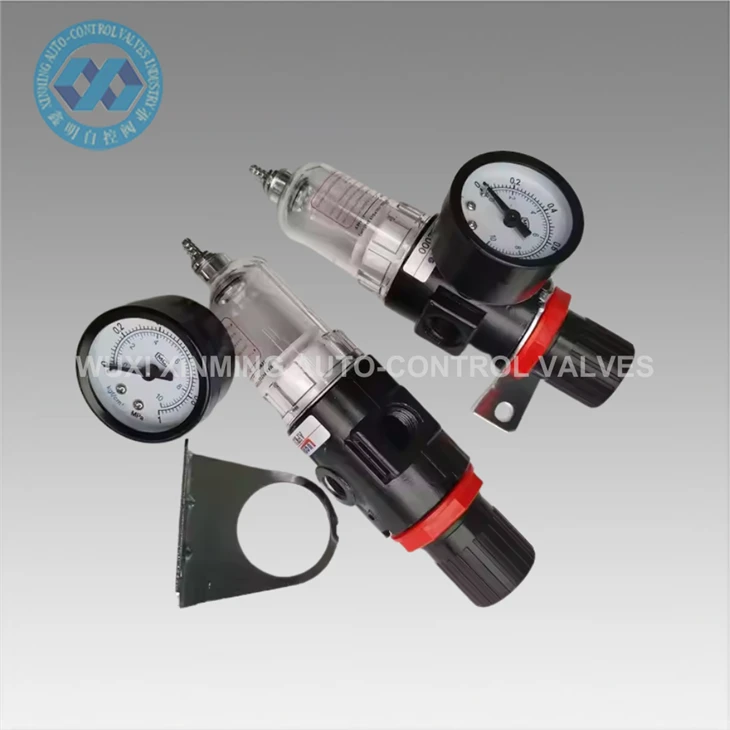
In addition, our Air Filter Regulator with Pressure Gauge is designed with user - friendly features and a focus on noise reduction. The pressure gauge allows for easy monitoring and adjustment of the pressure settings, which can help to optimize the operation of the regulator and reduce noise. The internal components are carefully selected and assembled to ensure a stable and quiet performance.
Measuring and Controlling the Noise Level
To ensure that our air filter regulators meet the highest standards of noise performance, we conduct rigorous testing during the manufacturing process. We use specialized equipment to measure the noise level at different flow rates and pressure settings. This allows us to identify any potential issues and make adjustments to the design or components as needed.
In addition to our in - house testing, we also provide our customers with guidelines on how to further reduce the noise level of our air filter regulators. For example, proper installation is crucial. Ensuring that the regulator is securely mounted and that all connections are tight can help to minimize vibrations and reduce noise. We also recommend regular maintenance, such as cleaning the filters and checking the internal components for wear and tear. This can help to keep the regulator operating smoothly and quietly over its lifespan.
Conclusion
The noise level of an air filter regulator during operation is an important consideration, especially in applications where a quiet working environment is essential. By understanding the factors that influence the noise level and choosing high - quality air filter regulators, users can ensure a more comfortable and efficient working environment.
At our company, we take pride in offering air filter regulators that are designed to minimize noise while delivering excellent performance. Our products, such as the AW2000 - 02 Precision Single - Stage Filter Regulator For Air Pumps, No Worries in Harsh Conditions! Multi - scenario Adaptive Filter Pressure Reducing Valve, and Air Filter Regulator with Pressure Gauge, are the result of years of research and development, and they are built to meet the diverse needs of our customers.
If you are interested in learning more about our air filter regulators or would like to discuss your specific requirements, we encourage you to contact us. Our team of experts is ready to assist you in finding the perfect solution for your application.
References
- Compressed Air Systems Handbook, various authors
- Industrial Pneumatic Components: Design and Application, John Doe