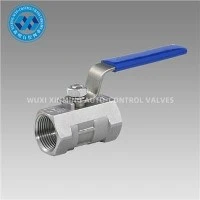
When it comes to the operation of industrial equipment, understanding the noise level is crucial for both the working environment and the equipment's performance. As a supplier of welded ball valves, I often receive inquiries about the noise level during their operation. In this blog, I'll delve into what affects the noise level of a welded ball valve when it's operating, how to measure it, and what can be done to control it.
Factors Affecting the Noise Level of a Welded Ball Valve
Fluid Velocity
One of the primary factors influencing the noise level of a welded ball valve is the velocity of the fluid passing through it. When the fluid moves at high speeds, it can create turbulence as it flows around the ball and through the valve ports. This turbulence generates pressure fluctuations, which are then converted into sound waves. For instance, in a high - pressure pipeline where the fluid is forced through the valve rapidly, the noise can be significantly higher compared to a low - flow application.


Pressure Drop
The pressure drop across the valve also plays a significant role. A large pressure drop means that there is a substantial change in pressure from the inlet to the outlet of the valve. This sudden change can cause the fluid to expand rapidly, leading to the formation of cavitation in some cases. Cavitation occurs when the pressure of the fluid drops below its vapor pressure, causing vapor bubbles to form and then collapse. The collapse of these bubbles creates shockwaves, which contribute to the noise. In welded ball valves, if the valve is not sized correctly for the system, a large pressure drop can occur, resulting in increased noise.
Valve Design
The design of the welded ball valve itself can impact the noise level. Valves with smooth internal surfaces and well - designed flow paths tend to produce less noise. For example, a valve with a streamlined ball and optimized port size can reduce turbulence and pressure fluctuations. Additionally, the type of seat material and its sealing mechanism can also affect noise. A valve with a tight - fitting seat may reduce leakage, which can in turn reduce noise caused by fluid seepage.
System Vibration
The overall system in which the welded ball valve is installed can also contribute to the noise level. Pipes that are not properly supported or are vibrating due to other equipment in the system can transmit vibrations to the valve. These vibrations can then be amplified by the valve and result in increased noise. For example, if a pump in the system is causing the pipes to vibrate, the welded ball valve may pick up these vibrations and generate additional noise.
Measuring the Noise Level of a Welded Ball Valve
To accurately measure the noise level of a welded ball valve during operation, a sound level meter is typically used. This device measures the sound pressure level in decibels (dB). When taking measurements, it's important to follow a standardized procedure. The sound level meter should be placed at a specific distance from the valve, usually at a point where the noise is most likely to be heard, such as near the operator's position or at a critical location in the plant.
Measurements should be taken under different operating conditions, including various flow rates and pressure drops. This allows for a comprehensive understanding of how the noise level changes with different system parameters. It's also important to note the background noise level in the area and subtract it from the measured noise level to obtain the actual noise generated by the valve.
Controlling the Noise Level of a Welded Ball Valve
Proper Sizing
Ensuring that the welded ball valve is properly sized for the system is one of the most effective ways to control noise. A valve that is too small for the flow rate will cause a large pressure drop and high fluid velocity, leading to increased noise. On the other hand, a valve that is too large may not provide proper control and can also result in inefficiencies. By accurately calculating the required flow rate, pressure drop, and other system parameters, the right - sized valve can be selected.
Flow Control
Controlling the flow rate of the fluid can also help reduce noise. This can be achieved through the use of flow control devices such as flow meters and regulators. By maintaining a stable and appropriate flow rate, the turbulence and pressure fluctuations in the valve can be minimized. For example, in a system where the flow rate varies widely, a flow control valve can be installed upstream of the welded ball valve to ensure a more consistent flow.
Noise Insulation
Adding noise insulation around the valve and the surrounding pipes can help reduce the noise level. This can be done using materials such as acoustic blankets or foams. These materials absorb the sound waves and prevent them from spreading into the surrounding environment. In industrial settings, where multiple valves are installed close to each other, noise insulation can be particularly effective in reducing the overall noise level.
System Design
Improving the overall system design can also reduce noise. This includes proper pipe support to minimize vibration, using flexible connectors to isolate the valve from system vibrations, and ensuring that the system is balanced. For example, if the pipes are not properly supported, they can vibrate and transmit noise to the valve. By installing pipe hangers and supports at appropriate intervals, these vibrations can be reduced.
Our Product Range
As a supplier of welded ball valves, we offer a wide range of products to meet different industrial needs. Our valves are designed with the latest technology to minimize noise and provide reliable performance. In addition to our welded ball valves, we also offer other types of high - quality ball valves, such as the High Performance PVC Ball Valve, WCB Ball Valve, and Tee High Platform Stainless Steel T - L - type Pneumatic Ball Valve. These valves are manufactured with precision and undergo strict quality control to ensure they meet the highest standards.
Conclusion
Understanding the noise level of a welded ball valve during operation is essential for maintaining a safe and comfortable working environment, as well as ensuring the efficient operation of the system. By considering the factors that affect noise, accurately measuring it, and implementing appropriate control measures, the noise level can be effectively managed. If you are in need of high - quality welded ball valves or have any questions about noise control in your valve systems, we encourage you to contact us for a procurement discussion. Our team of experts is ready to assist you in finding the best solutions for your specific needs.
References
- Flow Control Handbook, 2nd Edition, by David W. Miller
- Valve Handbook, 4th Edition, by William L. Nash
- Industrial Noise Control and Acoustics, by Clarence W. Harris