Hey there! I'm a supplier of AT Pneumatic Actuators, and today I wanna chat about one of the most crucial aspects of these devices: the settling time.
Let's start with the basics. A pneumatic actuator is a device that uses compressed air to generate mechanical motion. AT Pneumatic Actuators, in particular, are well - known in the industry for their reliability and efficiency. But what exactly is the settling time?
Settling time refers to the duration it takes for an AT Pneumatic Actuator to reach and stay within a specified error band after a change in its input signal. In simpler terms, when you tell the actuator to move to a certain position, how long does it take to get there and stop jiggling around?
When we talk about the factors that influence the settling time of an AT Pneumatic Actuator, there are quite a few to consider. One of the major ones is the internal friction within the actuator. Just like when you try to push a heavy box across a rough floor, more internal friction in the actuator makes it harder for it to move smoothly. This friction can come from the seals, bearings, and other moving parts.
Another factor is the air supply. If the compressed air we use to power the actuator isn't at the right pressure or flow rate, it can really mess with the settling time. Think of it as trying to fill a bucket with water from a slow - dripping faucet. It'll take forever to get it to the right level.
The load on the actuator also plays a big role. If the actuator has to move a really heavy or bulky object, it'll take longer to reach the desired position and settle down. It's like asking a sprinter to carry a fridge while running - they're gonna be slower and have more trouble stopping on a dime.
Now, why does the settling time matter? Well, in industrial applications, precision is key. Let's say you're using an AT Pneumatic Actuator in a manufacturing process where it controls the opening and closing of a valve. If the settling time is too long, it can lead to inconsistent product quality. For example, if the valve is supposed to open and close at specific intervals to let just the right amount of liquid or gas through, a long settling time might cause too much or too little to pass through. This can lead to wasted materials, defective products, and even safety hazards.
When we talk about measuring the settling time, there are a few ways to do it. One common method is using sensors. We can attach position sensors to the actuator to monitor its movement. These sensors can tell us exactly when the actuator reaches the desired position and how long it takes to stay within the acceptable error range.
We can also use specialized testing equipment that can record the actuator's response to input signals. This equipment can analyze the data and give us a clear picture of the settling time.
As a supplier of AT Pneumatic Actuators, we're constantly working on improving the settling time of our products. We invest a lot in research and development to come up with better designs that reduce internal friction. For instance, we use high - quality materials for seals and bearings that have lower friction coefficients.

We also offer actuators with adjustable air supply controls. This allows our customers to optimize the air pressure and flow rate based on their specific application, which can significantly improve the settling time.
Now, I wanna tell you about some related products that work well with our AT Pneumatic Actuators. Check out our High-Stability Pneumatic Solenoid Valve. This valve is designed to precisely control the air flow to the actuator, helping to improve its performance and reduce settling time.
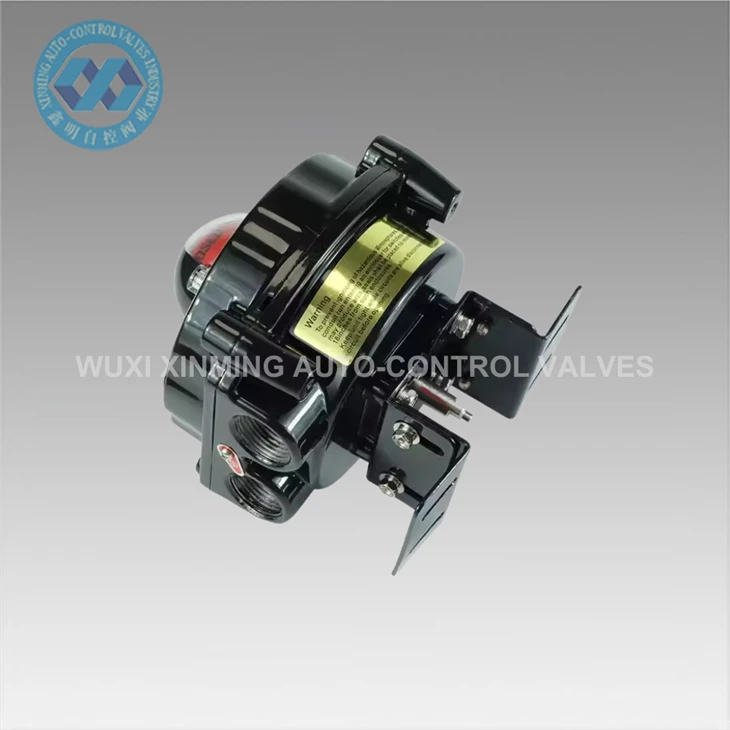
Another product is the High Temperature And High Pressure Challenge Pneumatic Limit Switch Explosion - proof Feedback Device. This device can give us real - time feedback on the actuator's position, which is super useful for monitoring the settling time and ensuring everything is running smoothly.
And if you need an actuator for a valve application, our 2 Way Ball Valve 3 Stage Pneumatic Actuator is a great choice. It's designed to handle different load requirements and has features that can help in achieving a shorter settling time.
If you're in the market for AT Pneumatic Actuators or have any questions about settling time or our related products, don't hesitate to get in touch with us. Whether you're from a small - scale workshop or a large - scale industrial plant, we have the expertise and products to meet your needs. We're here to help you get the most out of your actuator, ensuring that it operates with the highest precision and efficiency.
References
- Mechanical Engineering Handbook, CRC Press
- Pneumatic Systems Design and Application, Elsevier
- Industrial Automation: Principles and Applications, Wiley