

When it comes to operating a PVC ball valve, understanding the required torque is crucial for ensuring proper functionality and long - term reliability. As a PVC ball valve supplier, I've encountered numerous inquiries regarding this topic. In this blog, I'll delve into the factors that influence the torque needed to operate a PVC ball valve and provide some insights to help you make informed decisions.
What is Torque?
Torque is a measure of the force that can cause an object to rotate around an axis. In the context of a PVC ball valve, torque is the force required to turn the ball inside the valve from the open to the closed position or vice versa. It is typically measured in units such as inch - pounds (in - lb) or Newton - meters (N - m).
Factors Affecting the Torque Required to Operate a PVC Ball Valve
Valve Size
One of the most significant factors influencing the torque is the size of the valve. Larger valves generally require more torque to operate because they have a larger ball and a greater surface area in contact with the seat. As the diameter of the valve increases, the force needed to overcome the friction between the ball and the seat also increases. For example, a 1 - inch PVC ball valve will require less torque to operate than a 4 - inch PVC ball valve.

Pressure Rating
The pressure rating of the valve is another critical factor. Higher pressure ratings mean that there is more force acting on the ball and the seat, which increases the friction between them. When the valve is under high pressure, the force required to turn the ball against the pressure can be substantial. For instance, a PVC ball valve designed for a high - pressure application, such as in an industrial water supply system, will need more torque to operate compared to a valve used in a low - pressure residential plumbing system.
Temperature
Temperature can also have an impact on the torque required to operate a PVC ball valve. PVC is a thermoplastic material, and its properties change with temperature. At higher temperatures, PVC becomes softer, which can reduce the friction between the ball and the seat to some extent. However, extremely high temperatures can also cause the PVC to expand, which may increase the contact pressure between the ball and the seat and thus increase the required torque. On the other hand, at low temperatures, PVC becomes more brittle and stiffer, which can lead to an increase in the torque needed to turn the valve.
Seal Material
The type of seal material used in the valve plays a vital role in determining the torque. Different seal materials have different coefficients of friction. For example, a valve with a rubber seal may require less torque to operate compared to a valve with a PTFE (polytetrafluoroethylene) seal. PTFE is known for its low friction properties, but in some cases, the way it interacts with the PVC ball and the seat can still result in a significant amount of torque being required, especially when the valve is new and the surfaces are not yet well - worn.
Valve Design
The design of the PVC ball valve can also affect the required torque. Some valves are designed with features that reduce friction, such as a floating ball design or a trunnion - mounted ball design. A floating ball design allows the ball to move slightly under pressure, which can help to reduce the contact area between the ball and the seat and thus lower the torque. In contrast, a fixed - ball design may require more torque to operate because the ball is held more rigidly in place.
Calculating the Required Torque
Calculating the exact torque required to operate a PVC ball valve can be a complex process. It often involves considering all of the factors mentioned above, as well as the specific application and operating conditions. In general, valve manufacturers provide torque data for their products based on standard test conditions. However, these values may need to be adjusted for real - world applications.
There are some empirical formulas and methods that can be used to estimate the torque. For example, for a simple quarter - turn ball valve, the torque (T) can be estimated using the formula:
[T = k \times D^2\times P]
where (k) is a constant that depends on the valve design and seal material, (D) is the valve diameter, and (P) is the pressure acting on the valve. However, this is a very simplified formula and may not be accurate for all types of PVC ball valves.
In more complex applications, it may be necessary to conduct actual tests or consult with a valve engineer to determine the precise torque requirements.
Torque and Actuation
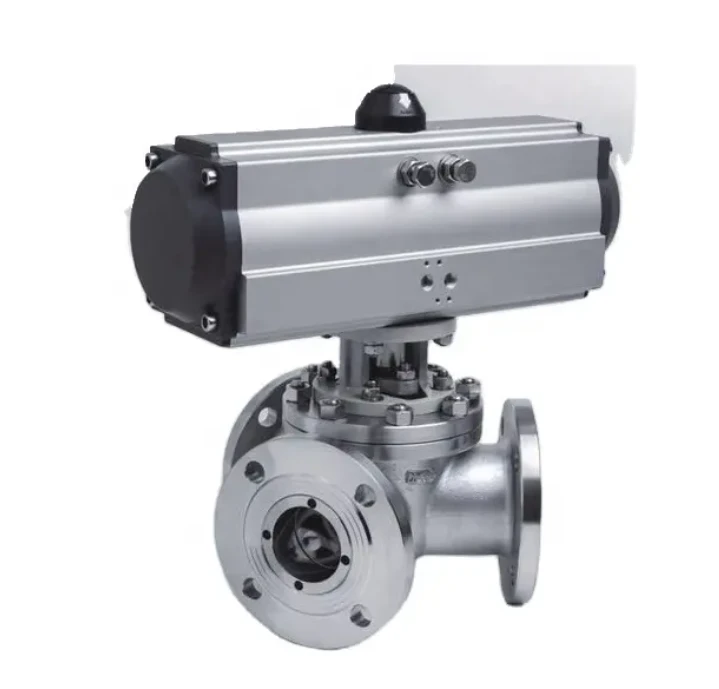
In many cases, PVC ball valves are actuated using an external device, such as a pneumatic actuator. Pneumatic actuators can provide the necessary force to operate the valve, especially in applications where manual operation is not practical or where a high - speed operation is required.
If you are looking for a reliable solution with an actuator, we offer a range of products such as the Pneumatic Actuator Tri - clamp Three Way Ball Valve. This valve combines the benefits of a three - way design with the power of a pneumatic actuator, providing a flexible and efficient solution for various fluid control applications.
Another option is the 180 Degree Pneumatic Actuator 3 Way Ball Valve, 3 Way Ball Valve With Pneumatic Actuator. This valve is designed for precise control and can be easily integrated into existing systems.
For those who need a high - quality three - way solution, our High Quality Three - way Pneumatic Ball Valve is an excellent choice. It offers reliable performance and long - term durability.
Importance of Correct Torque
Using the correct torque to operate a PVC ball valve is essential for several reasons. If the torque is too low, the valve may not fully close or open, which can lead to leakage and inefficiencies in the system. On the other hand, if the torque is too high, it can cause damage to the valve components, such as the ball, the seat, or the stem. This can result in premature failure of the valve and costly repairs.
Conclusion
As a PVC ball valve supplier, I understand the importance of providing our customers with high - quality valves that are easy to operate and reliable. The torque required to operate a PVC ball valve is influenced by multiple factors, including valve size, pressure rating, temperature, seal material, and valve design. By understanding these factors, you can make more informed decisions when selecting a valve for your application.
If you have any questions about the torque requirements of our PVC ball valves or need help in choosing the right valve for your project, please don't hesitate to contact us. We are here to assist you in finding the best solution for your fluid control needs. Whether you need a simple manual valve or a valve with a pneumatic actuator, we have the expertise and the products to meet your requirements. Let's start a conversation about your procurement needs and find the perfect PVC ball valve for you.
References
- ASME B16.34 - Valve Flanges and Fittings - Pressure - Temperature Ratings
- Valve Handbook, 4th Edition by Robert W. Duffy




