

What is the vibration level when a ball valve is in operation?
As a seasoned ball valve supplier, I've encountered numerous inquiries about the vibration levels during a ball valve's operation. Understanding these vibration levels is crucial for ensuring the long - term performance, safety, and efficiency of the valve and the entire system it's integrated into.
Factors Affecting Vibration Levels
-
Fluid Flow Characteristics
The nature of the fluid flowing through the ball valve plays a significant role in determining the vibration level. High - velocity fluids can cause more turbulence and pressure fluctuations, which in turn lead to increased vibrations. For instance, in a pipeline where the fluid is flowing at a very high speed, the sudden change in direction when passing through the ball valve can create eddies and vortices. These fluid disturbances exert unsteady forces on the valve components, resulting in vibrations. Additionally, if the fluid has a high viscosity, it may cause more resistance and uneven flow patterns, also contributing to vibrations. -
Valve Design and Geometry
The design of the ball valve itself is a key factor. A well - designed ball valve with smooth internal contours can minimize fluid disturbances and thus reduce vibrations. For example, valves with a full - port design, where the bore of the valve is the same size as the pipeline, allow for a more laminar flow of the fluid, reducing the chances of turbulence and vibration. On the other hand, a reduced - port valve may cause more significant pressure drops and flow disruptions, leading to higher vibration levels. The shape of the ball and the seat also matters. A ball with an irregular surface or a seat that is not properly machined can cause uneven sealing and fluid leakage, which can generate vibrations. -
Operating Conditions
The pressure and temperature of the system in which the ball valve operates can impact vibration levels. High - pressure systems can subject the valve to greater forces, which may cause the valve to vibrate more. Similarly, extreme temperatures can affect the material properties of the valve components. For example, at high temperatures, some materials may expand, altering the clearances between the ball and the seat, which can lead to increased vibrations. Moreover, rapid changes in pressure or temperature, such as those caused by sudden opening or closing of the valve, can create shock waves in the fluid, resulting in transient vibrations. -
Installation and Mounting
Proper installation is essential for minimizing vibrations. If the ball valve is not installed correctly, it can be subject to misalignment or excessive stress. For instance, if the valve is not properly aligned with the pipeline, it can cause uneven forces on the valve body, leading to vibrations. Inadequate support during installation can also allow the valve to move freely, increasing the vibration amplitude. Additionally, the type of mounting hardware used can affect the vibration transfer. Using flexible mounts can help absorb some of the vibrations, while rigid mounts may transmit vibrations more easily to the surrounding structure.
Measuring Vibration Levels
To accurately assess the vibration levels of a ball valve during operation, several methods can be employed.
-
Accelerometers
Accelerometers are commonly used sensors for measuring vibration. They can be attached to the valve body at strategic locations to detect the acceleration of the vibrations. By analyzing the acceleration data, we can determine the frequency and amplitude of the vibrations. High - frequency vibrations may indicate issues such as fluid cavitation or mechanical resonance, while large - amplitude vibrations can be a sign of a more serious problem, such as misalignment or a damaged component. -
Laser Doppler Vibrometers
These devices use laser light to measure the velocity of the vibrating surface. They offer a non - contact method of vibration measurement, which is particularly useful in situations where attaching sensors directly to the valve is not feasible, such as in high - temperature or hazardous environments. Laser Doppler vibrometers can provide highly accurate measurements of vibration velocity, allowing for detailed analysis of the vibration characteristics. -
Vibration Analysis Software
Once the vibration data is collected, vibration analysis software can be used to process and interpret the data. This software can identify patterns, frequencies, and amplitudes of the vibrations, and compare them to pre - defined standards or baseline data. By doing so, it can help diagnose potential problems, such as wear and tear, loose components, or fluid - related issues.
Acceptable Vibration Levels
Determining the acceptable vibration levels for a ball valve depends on several factors, including the application, the type of valve, and the industry standards.
-
Industry Standards
Different industries have their own standards for vibration levels in valves. For example, in the oil and gas industry, where valves are often used in high - pressure and high - flow applications, strict standards are in place to ensure the safety and reliability of the equipment. These standards typically specify the maximum allowable vibration amplitudes and frequencies for different types of valves. In the power generation industry, similar standards are used to prevent damage to valves and other components in the power plant. -
Application - Specific Requirements
The specific application of the ball valve also influences the acceptable vibration levels. For example, in a precision control system, even small vibrations can affect the accuracy of the flow control, so very low vibration levels are required. In contrast, in a less critical application, such as a simple water supply system, slightly higher vibration levels may be tolerated as long as they do not cause any significant damage to the valve or the pipeline.
Impact of Excessive Vibration
Excessive vibration in a ball valve can have several negative consequences.
-
Component Wear and Tear
Vibrations can cause the valve components to rub against each other, leading to increased wear. For example, the ball and the seat may experience accelerated wear due to the constant vibration, which can affect the sealing performance of the valve. Over time, this can lead to leakage and reduced efficiency of the valve. Additionally, other internal components, such as the stem and the packing, may also be subject to wear, which can further compromise the valve's functionality. -
Structural Damage
Prolonged exposure to high - level vibrations can cause structural damage to the valve body and the surrounding pipeline. The vibrations can create stress concentrations in the valve, leading to cracks or fractures in the material. This can not only result in costly repairs but also pose a safety risk, especially in applications where the fluid being handled is hazardous. -
Noise Generation
Vibrations can generate noise, which can be a nuisance in industrial environments. Excessive noise can also indicate a problem with the valve, such as fluid cavitation or mechanical resonance. Moreover, continuous exposure to high - level noise can have a negative impact on the health of the workers in the vicinity.
Our Solutions as a Ball Valve Supplier
As a ball valve supplier, we offer a range of solutions to address vibration issues.
-
High - Quality Valve Design
We design our ball valves with a focus on minimizing vibrations. Our engineers use advanced computational fluid dynamics (CFD) simulations to optimize the internal geometry of the valve, ensuring a smooth and laminar flow of the fluid. We also use high - quality materials and precision manufacturing processes to ensure the accuracy and reliability of the valve components. For example, our Electrical Ball Valve is designed with a streamlined flow path to reduce turbulence and vibration. -
Customization
We understand that different applications have different requirements. That's why we offer customized ball valve solutions to meet the specific needs of our customers. Whether it's a high - pressure, high - temperature application or a precision control system, we can design and manufacture a ball valve that can operate with minimal vibrations. For instance, our Ceramic Ball Valve is suitable for applications where high wear resistance and low vibration are required. -
Installation and Maintenance Support
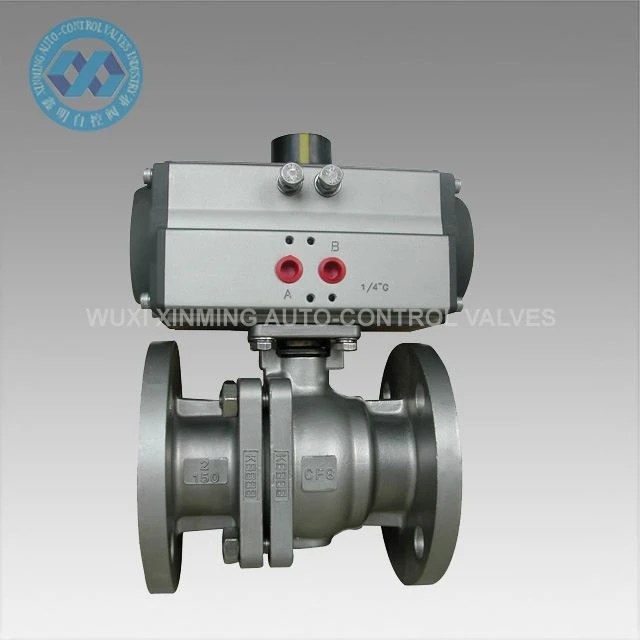
We provide comprehensive installation and maintenance support to our customers. Our technicians can assist with the proper installation of the ball valve to ensure that it is correctly aligned and supported. We also offer regular maintenance services, including vibration monitoring and analysis, to detect and address any potential issues before they become serious problems. Our Flanged Stainless Steel Ball Valve comes with detailed installation and maintenance guidelines to help our customers ensure its long - term performance.
If you are looking for high - quality ball valves with low vibration levels for your application, we would be more than happy to discuss your requirements. Our team of experts can provide you with professional advice and customized solutions. Contact us today to start the procurement negotiation process and find the perfect ball valve for your needs.
References
- ANSI/ISA - 75.23 - 2002, “Control Valve Vibration Testing”
- API 6D, “Specification for Pipeline Valves”
- ASME B31.3, “Process Piping”




