As a trusted supplier of WCB ball valves, I often encounter inquiries regarding their fire - safe capabilities. In this blog post, I'll delve into the topic to provide a comprehensive understanding of whether WCB ball valves are fire - safe.
Understanding WCB Ball Valves
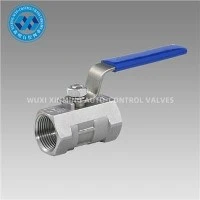
WCB is a common material for ball valves. It stands for a type of carbon steel casting that is widely used in valve manufacturing due to its good strength, ductility, and relatively low cost. WCB ball valves are utilized in various industries, including oil and gas, chemical processing, and water treatment. These valves control the flow of fluids by rotating a ball with a bore inside the valve body. When the bore is aligned with the pipeline, the fluid can flow through; when the ball is rotated 90 degrees, the flow is blocked.
Fire - Safe Requirements
In industries where there is a risk of fire, valves are required to meet specific fire - safe standards. The primary objective of a fire - safe valve is to prevent the uncontrolled release of flammable fluids during and after a fire. A fire - safe valve should be able to maintain its integrity, seat leakage rate, and stem sealing performance under high - temperature conditions.
International standards such as API 607 and API 6FA are commonly used to evaluate the fire - safe performance of valves. API 607 is applicable to quarter - turn valves, including ball valves, and it specifies a test procedure to simulate a fire scenario. The valve is subjected to a fire for a certain period (usually 30 minutes) at a specified temperature (around 816°C), and then the leakage rates through the seat and stem are measured. API 6FA is focused on the performance of valves in hydrocarbon fires and also sets requirements for valve design, materials, and testing.
Factors Affecting the Fire - Safe Performance of WCB Ball Valves
Material Properties
The material of the valve body and its components plays a crucial role in determining its fire - safe performance. WCB carbon steel has certain limitations in high - temperature environments. When exposed to fire, the mechanical properties of WCB can change significantly. The strength and hardness may decrease, and the steel may undergo oxidation and deformation.
However, the overall fire - safe performance of a WCB ball valve is not solely dependent on the valve body material. The seat and stem sealing materials are also critical. For example, traditional elastomeric seat materials, such as Teflon (PTFE), are not fire - resistant. They will melt and burn when exposed to high temperatures, which can lead to a significant increase in seat leakage. To address this issue, fire - safe ball valves often use metal - to - metal seats or seats with a combination of metal and graphite. Graphite is a fire - resistant material that can maintain its sealing properties at high temperatures.
Design Features
The design of the WCB ball valve also affects its fire - safe performance. A well - designed valve should have features that minimize the impact of fire on its operation. For instance, the valve should have a proper stem sealing system. In a fire - safe ball valve, the stem seal is often designed to prevent the escape of fluid even if the primary sealing material fails. This can be achieved through the use of multiple sealing elements or a backup sealing system.
Another important design aspect is the valve's ability to withstand thermal expansion. During a fire, the valve components will expand due to the high temperature. A valve with a poor design may experience jamming or excessive stress, which can lead to failure. Therefore, the valve should be designed with sufficient clearances and expansion allowances to accommodate thermal expansion without compromising its functionality.
Fire - Safe WCB Ball Valve Solutions
As a supplier, we offer WCB ball valves that are designed to meet fire - safe requirements. Our valves are engineered with advanced technologies and high - quality materials to ensure reliable performance in fire - prone environments.
Seat Design
We use metal - to - metal seats or seats with a graphite insert in our fire - safe WCB ball valves. The metal - to - metal seats provide a reliable sealing mechanism even at high temperatures. The graphite insert acts as a backup seal and can maintain the sealing performance if the primary seal fails. This combination ensures that the valve can meet the strict seat leakage requirements specified in the fire - safe standards.
Stem Sealing
Our fire - safe WCB ball valves are equipped with a double - sealing stem system. The primary stem seal is made of a high - performance elastomeric material for normal operation, while the secondary seal is a graphite packing. In case of a fire, the elastomeric seal may fail, but the graphite packing will provide a reliable backup to prevent fluid leakage through the stem.
Testing and Certification
All our fire - safe WCB ball valves are tested in accordance with international standards such as API 607 and API 6FA. We have a state - of - the - art testing facility where the valves are subjected to rigorous fire tests to ensure their compliance with the standards. Once the valves pass the tests, they are certified as fire - safe, which gives our customers confidence in their performance.
Applications of Fire - Safe WCB Ball Valves
Fire - safe WCB ball valves are widely used in industries where fire safety is a top priority. In the oil and gas industry, these valves are installed in pipelines, storage tanks, and refineries. They are used to control the flow of flammable fluids such as crude oil, natural gas, and refined products. In the chemical industry, fire - safe ball valves are used in plants that handle hazardous chemicals. They can prevent the release of toxic or flammable chemicals in case of a fire, which is crucial for protecting the environment and the safety of the workers.


Related Products
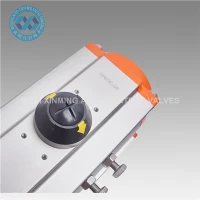
In addition to our standard fire - safe WCB ball valves, we also offer a range of related products. For example, our Pneumatic Actuated Ball Valve provides an automated solution for flow control. It is suitable for applications where remote or quick operation is required. The Intelligent - driven Double - acting Pneumatic Plastic Actuator Ball Valve For Precise Opening Control is designed for applications that demand high - precision flow control. And the Tee High Platform Stainless Steel T - L - type Pneumatic Ball Valve is a specialized valve for complex piping systems.
Conclusion
In conclusion, WCB ball valves can be made fire - safe through the use of appropriate materials, design features, and testing. While the WCB material itself has limitations in high - temperature environments, the overall fire - safe performance of the valve can be enhanced by using fire - resistant seat and stem sealing materials and a well - designed valve structure.
If you are looking for high - quality fire - safe WCB ball valves or any of our related products, we are here to help. Our team of experts can provide you with detailed technical information and customized solutions based on your specific requirements. Contact us to start a procurement discussion and ensure that your projects are equipped with reliable and fire - safe valves.
References
- American Petroleum Institute (API). API 607 - Fire Test for Quarter - Turn Valves and Valve Fittings.
- American Petroleum Institute (API). API 6FA - Fire Test for Valves.