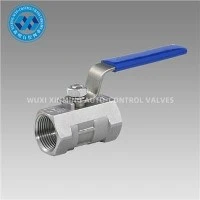
Hey there! As a supplier of vacuum ball valves, I've seen firsthand how crucial it is to ensure these valves perform at their best. In this blog, I'm gonna share with you some practical ways to test the performance of a vacuum ball valve.
1. Visual Inspection
Before diving into more complex tests, a simple visual inspection can tell you a lot. Check the valve's exterior for any signs of damage, like cracks, dents, or scratches. These flaws could potentially lead to leaks or other performance issues down the line. Make sure all the components are properly assembled and that there are no loose parts. Also, look at the valve's finish. A smooth, even finish usually indicates a well - made valve.
2. Pressure Testing
One of the most important aspects of a vacuum ball valve's performance is its ability to handle pressure. There are two main types of pressure tests you can do: static and dynamic.
Static Pressure Test
In a static pressure test, you'll seal the valve and apply a specific pressure to it. You can use a pressure gauge to measure the pressure accurately. For a vacuum ball valve, you'll typically want to test it at different pressure levels, both below and above the normal operating pressure. Keep the pressure constant for a set period, say 15 - 30 minutes, and observe if there are any pressure drops. A significant pressure drop could mean there's a leak in the valve.
Dynamic Pressure Test
The dynamic pressure test is a bit more complex. It involves opening and closing the valve while under pressure. This simulates real - world operating conditions. You can use a pressure - cycling machine to apply the pressure and control the valve's movement. Monitor the pressure changes during the opening and closing cycles. If the valve can't maintain a stable pressure during these cycles, it might not be performing well.
3. Leakage Testing
Leakage is a major concern when it comes to vacuum ball valves. There are several methods to test for leaks.
Bubble Test
The bubble test is a simple and effective way to detect leaks. You can submerge the valve in a liquid, usually soapy water. Then, apply pressure to the valve. If there are any leaks, bubbles will form at the leak points. This method is great for detecting large leaks, but it might not be sensitive enough for very small ones.
Helium Mass Spectrometer Test
For more precise leak detection, you can use a helium mass spectrometer. This method involves filling the valve with helium and then using the spectrometer to detect any helium that escapes. Helium is a very small molecule, so it can easily pass through even the tiniest leaks. This test can detect leaks as small as 10^-9 mbar·l/s, making it ideal for high - performance vacuum ball valves.


4. Flow Rate Testing
The flow rate of a vacuum ball valve is another important performance indicator. You can measure the flow rate by using a flow meter. Connect the flow meter to the valve and open the valve fully. Measure the volume of fluid or gas that passes through the valve in a given time. Compare the measured flow rate with the valve's rated flow rate. If the measured flow rate is significantly lower, it could mean there's a blockage or some other issue inside the valve.
5. Actuation Testing
Most modern vacuum ball valves are actuated, which means they can be opened and closed automatically. You need to test the actuation system to ensure it works properly.
Manual Actuation Test
First, try manually actuating the valve. Make sure the handle or lever moves smoothly and that the valve opens and closes fully. Check for any signs of resistance or sticking. If the manual actuation is difficult, it could indicate a problem with the valve's internal components or the actuation mechanism.
Automated Actuation Test
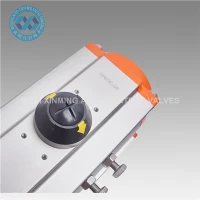
If the valve has an automated actuation system, like a pneumatic or electric actuator, test it. For a pneumatic actuator, check the air pressure and make sure it's within the recommended range. Then, activate the actuator and observe how the valve responds. The valve should open and close quickly and accurately. You can also test the actuator's speed and repeatability. For an electric actuator, check the electrical connections and test the motor's operation.
6. Temperature Testing
Vacuum ball valves may be used in environments with different temperatures. You need to test the valve's performance at different temperatures.
Cold Temperature Test
You can place the valve in a cold chamber and lower the temperature to the minimum operating temperature. Let the valve stabilize at this temperature and then perform the pressure, leakage, and actuation tests. Cold temperatures can make the valve's materials more brittle, so it's important to ensure it still functions properly.
Hot Temperature Test
Similarly, you can test the valve at high temperatures. Place the valve in a hot chamber and raise the temperature to the maximum operating temperature. Again, perform the same tests as before. High temperatures can cause the valve's materials to expand, which might affect its performance.
Product Recommendations
If you're in the market for high - quality vacuum ball valves, we've got some great options. Check out our Intelligent - driven Double - acting Pneumatic Plastic Actuator Ball Valve For Precise Opening Control. It offers precise control and excellent performance. We also have the PVC Ball Valve, which is durable and corrosion - resistant. And for more complex applications, our 3 Way Ball Valve With Pneumatic Actuator is a great choice.
Conclusion
Testing the performance of a vacuum ball valve is a multi - step process. By conducting visual inspections, pressure tests, leakage tests, flow rate tests, actuation tests, and temperature tests, you can ensure that the valve will work reliably in your application. If you have any questions about vacuum ball valves or need help with testing, feel free to reach out to us. We're here to assist you in finding the right valve for your needs and making sure it performs at its best. Let's start a conversation about your procurement requirements and see how we can work together to get you the perfect vacuum ball valve solution.
References
- Valve Handbook, various editions
- Industry standards for vacuum ball valve testing